

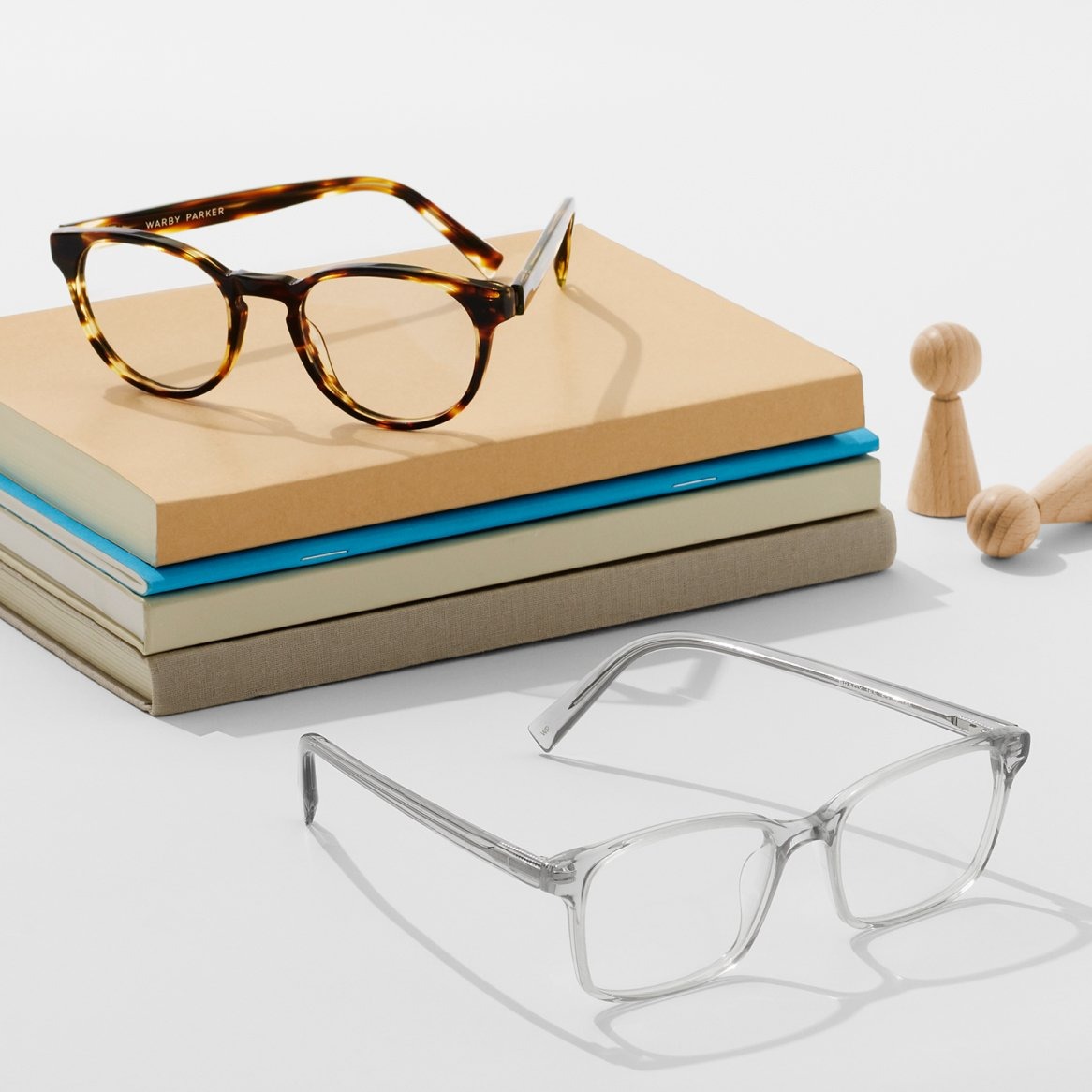
How Should Your Glasses Fit?
When you’re buying a new pair of glasses, your to-do list can grow quite long. From potentially updating your eye prescription to picking out your favorite frame styles, to researching the types of lenses and coatings, there are many things to figure out. Amidst all those considerations, it’s easy to forget another important one: fit. Anyone who’s had a pair of glasses fly off their face at any moment knows that well-fitting frames are a must, but the fit is more than a matter of convenience and comfort. Glasses that don’t fit well can cause eye strain, headaches, and disruptions to your vision. So, what does it look and feel like when your glasses fit? In this article, we’ll walk you through the process of finding frames that are just right for your face.What Determines the Fit Of Your Glasses?
Glasses might share the same basic build—two lenses in a frame—but there are many differences between individual frames that can impact fit. Additionally, your unique eyes and face shape will help determine how well a frame suits you.Frame Width
Your glasses frame width should align with your face’s width at its temples. In other words, your frames should not extend too far past the sides of your face. If you’re wearing a frame that’s too wide for you, your eyes won’t be centered in the middle of the lenses. If you’re shopping for the first time we recommend starting with the medium size, as it’s a good fit for many people.Frame Measurements
You can usually find frame measurements printed on the inside of one of your frame’s temple arms. These measurements consist of three numbers, representing the lens width, bridge width, and temple length (in millimeters).- Lens width: The width of one lens.
- Bridge width: The shortest distance between the two lenses, which includes the bar that connects them (the bridge).
- Temple length: The length of each temple arm measured from the hinge to the tip.
Pupillary Distance
Your pupillary distance (PD) is the distance between the pupils of your eyes (in millimeters). It’s a handy measurement that helps opticians to center your frames in front of your eyes. This centering is crucial: Look straight through the middle (or optical center) of your glasses lenses. If you end up looking out of the sides instead, you won’t be getting optimal clarity of vision—especially if you wear progressives and other frames with multifocal lenses. If the fit is preventing you from centering your pupils behind the lenses, transitioning between the zones distance and near vision will be more difficult. Your optometrist or optician can measure your pupillary distance, or you can measure it yourself. Check out our step-by-step guide on how to measure your pupillary distance at home.Face Shape
Finally, your face shape can also affect how your glasses fit. No two people have the same exact ears, eyebrows, or cheekbones. Unless you’re an identical twin, you’ll want to try on new frames rather than accepting hand-me-downs. You can also look for fashion tips about the best glasses for your face shape—but know that those tips should always be taken as suggestions. When it comes to style, follow your fancy!What if Your Glasses Don’t Fit Quite Right?
Need some troubleshooting tips for ill-fitting glasses? Read through the scenarios below to diagnose the problem.- Your glasses keep sliding down your face: Your frames might be too narrow for your face, or they might be too loose overall.
- The temples are digging in behind your ears: Your glasses are too tight or the temples need adjusting. We always recommend taking your frames to an optician for a professional adjustment. If you must adjust your glasses at home, do it with the utmost care.
- Your glasses irritate your nose or leave red marks on your skin: Your frames are likely too tight. If everything else feels great, you might consider looking at frames with adjustable nose pads as an alternative to the uncomfortable ones.
- Your glasses touch your cheeks: If your glasses have adjustable nose pads, they might need to be posed to lift the frames further away from your face and cheeks. If this problem persists across different frames, you could be a great candidate for Low Bridge Fit glasses. These frames are designed for people with low nose bridges, wide faces, and/or high cheekbones.
- Your glasses give you headaches: Headaches can be caused by glasses that don’t fit as well as glasses that don’t match your prescription. If you experience headaches while wearing your glasses, schedule an eye exam with an optometrist to try and pin down the source of the problem.


Comments